ContextGate @contextgate
Building governed AI agents. 🛡️ We are the Action Gateway enforcing policies between AI and your tools at execution time. No vendor lock-in, just secure AI. contextgate.ai London Joined January 2026-
Tweets46
-
Followers7
-
Following22
-
Likes3
$300. That's how much free AI tokens we're putting into every new ContextGate workspace this month. No credit card. No forms. Just $300 given to you so you can build governed AI agents for yourself. As soon as you sign up on our website. Run a real agent end-to-end — trigger, model, rules, tools — and watch the 5-box flow on screen as it processes your actual data. Audit who can touch what. Block the things you don't want shipped. See the whole shape of an agent on one page. #AIAgents #AIGovernance #LLMOps #ContextGate

My Bookkeeper AI Agent Does a Much Better Job Than Me contextgate.ai/articles/i-ask…
When AI interprets "tidy this up" as "delete this whole database" (true story) contextgate.ai/articles/ai-ag…
A security vendor pitched us their new "AI governance" product last week. In 10 minutes we knew it was vapor. Here are the four questions that cut through everything. The AI governance category is forming fast — and the gap between a real product and a marketing page is getting harder to spot. If you're evaluating governance tools right now, save yourself the 45-minute demo with these four questions up front: 1. Does it work across every AI tool we use — or only the ones from your company? Why this matters: your AI strategy will change. You'll try a new model next quarter. Your team will adopt a new AI-powered tool. A governance product that only works with one vendor's ecosystem is a liability the moment you want to switch. 2. Does it actually inspect what the AI is doing — or just who's asking? Why this matters: there's a big difference between checking identity ("yes, this agent is allowed in") and checking actions ("yes, this specific thing the agent is about to do is safe"). Some tools only check identity. That's not governance. That's authentication. 3. Is every action logged — or only a sample? Why this matters: if something breaks at 3am on a Saturday, sampled logs won't tell you what happened. You need every action captured. Not every tenth one. Not every hundredth. 4. Does your company also sell us the AI we're trying to govern? Why this matters: if the vendor offering the governance layer also sells you the AI model, the agent platform, or the tools underneath, they're grading their own homework. Independent governance means independent answers. ContextGate addresses all four. And we don't sell you the thing you're governing — ever. Ask us — or any vendor you're evaluating — the same four questions. If the answer to #1, #2, or #3 is "no" or "we're working on it," walk. If this list is useful, share it with whoever's running your AI evaluation. Visit our website to learn more and try the product for free today. #AIGovernance #EnterpriseSecurity #CISO #AIAgents #MCP
The startup playbook says "ship fast, stay quiet." We're doing the opposite. Here's everything we shipped this week at ContextGate — explained without the engineering jargon, because if a security lead can't understand what we built, we failed. 1. Visual policy editor for content blocking. Security leads can now set rules like "don't share customer data with external AI tools" through point-and-click. No engineer required. 2. File preview + audit trail. Every file your AI agents touched now shows up on one page, with a preview so you can see exactly what the AI agents are doing with each file. 3. You can now enable your AI agent to use a browser and do any tasks that a browser might require seamlessly with a click of a button. 4. Ephemeral SQL — DuckDB databases. Your AI agents can now work with numbered data much more accurately and provide an order to portray all of everything they're doing and all the calculations they're making. 5. Bug fixes and other product improvements to make it even more rock solid. What we're watching next week: → EU AI Act enforcement deadline inches closer (August) → More MCP security disclosures are likely If you're building in this space, drop a comment — we love comparing notes. Check out the website for more information and to try the product out for yourself today. #BuildInPublic #AIGovernance #ShipIt #AIAgents #Startups
Would you let your landlord also be your tenant rights lawyer? Because that's exactly what most "AI governance" tools are. Picture this: you're renting an apartment. Your landlord does something that costs you money. You want to sue. And your landlord says: "Don't worry, I also happen to be your lawyer. I'll handle it." You'd laugh. Or run. But that's how most "AI governance" offerings from cloud providers and AI platforms work right now. When your cloud provider, your AI vendor, or your agent platform ships a "governance layer," they're incentivized to say yes to their own tools. They're selling you those tools. Their governance tends toward "looks fine to us." An independent governance layer says yes only when your policy says yes. ContextGate doesn't sell you AI models. We don't sell cloud. We don't run your agents. We sit in front of whatever you're already using — any AI model, any MCP server, any infrastructure — and enforce your rules. Not a vendor pitch dressed up as governance. Neutrality isn't a feature request. It's the whole point of the category. If this lands, share it with whoever owns the AI strategy at your company. The landlord/lawyer problem is real, and it's everywhere. Visit our website to learn more or try the product for free. #AIGovernance #VendorNeutral #AIAgents #EnterpriseAI #CISO
If you run AI in Europe, the first enforceable AI law hits in August. Your current logs will NOT pass the audit. Here's what changes — and what you need now. The EU AI Act is the first major AI law in any big economy. Starting August 2026, enforcement begins for "high-risk" AI systems — AI used in finance, healthcare, hiring, critical infrastructure, law enforcement. Anywhere the stakes are real. A specific requirement just got clearer this month: what European auditors will actually ask to see. Logging that an AI answered a question is not enough. The law expects a full trace: → What input did the AI see? → What decision did it make, and why? → Which external tool did it call? → What did that tool return? → Could a human have stopped the process before it acted? Most AI setups today log inputs and outputs. That will fail. What you need is a chain of custody for every AI decision. Every input, every tool touched, every policy check, every output — all connected in a single trace. When the auditor asks "what happened at 2:47pm on March 15th?" you can show them the full chain in under a minute. This is what ContextGate was built for. Every tool call your AI makes runs through our policy engine, and the audit trail shows the full chain — not just the final answer. Four months until the deadline. If your logs can't produce that trace today, now's the time. Is your organization ready? Drop a comment if you're in the middle of this evaluation — we'd love to compare notes. Search ContextGate on LinkedIn. #EUAIAct #AICompliance #AIGovernance #AIAudit #RegTech
A single user request can now trigger 300+ AI-driven actions across your infrastructure. You probably have no idea what any of them are doing. Two acronyms you're going to hear a lot this year: MCP (Model Context Protocol) — how AI agents talk to your tools. Gmail, Salesforce, databases, anything with an API. A2A (Agent-to-Agent) — how AI agents talk to each other. Graduated from draft to production standard this month. Here's why putting them together is the story: Until recently, your AI agent had tools. You asked it something, it used Gmail and your CRM, gave you an answer. Simple. Now that same agent can hand off tasks to OTHER agents — yours, your vendor's, third-party ones. Each of those agents has its own tools. Some of them hand off to more agents. The math gets ugly fast: → 1 agent × 10 tools × can delegate to 3 more agents = 30+ possible actions per request → Add a second hop = 300+ actions → Add a third = the math breaks This is what security teams call the "blast radius problem." Every hand-off is a new place where sensitive data could leak, an action could misfire, or a policy could get skipped — by an agent you didn't even deploy. The only defense: a governance layer that sees every hop. ContextGate policy checks apply to BOTH agent-to-tool AND agent-to-agent calls. Every hop logged with the full chain visible. If agent A shouldn't be talking to agent B, the handoff is blocked before it happens. Protocols are maturing fast. Governance has to keep up — not because rules are fun, but because when something goes wrong (and it will), you need to be able to show what happened. Visit our website to try it for free now. #A2A #MCP #AIGovernance #AIAgents #AIInfrastructure
Microsoft, Okta, NIST, and a freshly-funded startup all shipped AI governance products in the last 30 days. If you're a CISO, you're about to be pitched a LOT of "AI governance" products. Most of what you'll see is vapor. Here's how to tell the difference. Something quietly happened this month: AI agent governance became a real product category. The launches in the last 30 days: → Microsoft released an open-source toolkit for securing AI agents → Okta (the login giant) is launching its AI Agents product on April 30 → Microsoft Power Apps added a "human approval" feed — AI agents now pause for review before risky actions → Capsule Security, a new startup, emerged from stealth with $7 million and a platform → The US government (NIST) opened a formal AI agent standards initiative Two years ago this was a slide in a deck. Now it's a category. Here are four questions that separate the real from the marketing: 1. Does it work with every AI tool you use — or only the vendor's own stack? Your AI strategy will change. Don't lock yourself in. 2. Does it actually inspect what the AI is doing — or just who's asking? "Yes, this agent is allowed in" is not the same as "yes, this specific action is safe." 3. Is every action logged — or only sampled? If an incident happens at 3am, sampled logs won't tell you what went wrong. 4. Does the vendor also sell you the AI you're trying to govern? If yes, they're grading their own homework. ContextGate answers yes to all four. Ask us — or any vendor — the same four questions. If you're currently evaluating governance tools, drop a comment — we'll share our side-by-side comparison framework. Try it free on our website. #AIGovernance #EnterpriseAI #CISO #AIAgents #AIInfrastructure
Most "AI governance" products require a developer to change a single rule. Think about that for a second. The person accountable for "we didn't leak customer data" is usually the security lead or CISO. Not an engineer. So who's actually defending the policy in the audit? We just shipped something we've been building for months: a visual rules editor for AI content policies. Security leads can now set governance rules through point-and-click — no YAML, no deploys, no engineering tickets. What that means in practice: → Set rules in plain language: "block credit card numbers in outbound email," "no source code in chats with external AI" → Apply different rules to different parts of the org — sales agents and engineering agents don't need the same policies → Preview what gets blocked before the rule goes live → Every decision logged — audits become opening a page, not a multi-week project The principle: if the person accountable for governance can't read the policy, they can't defend it in an audit. We made it readable. If you're running AI agents at a company with a real compliance function, this changes who can actually own the governance layer. Follow us for more on how we're building AI governance for the people who actually need to use it. Visit our website now to try it for free. #AIGovernance #CISO #PolicyBuilder #BuildInPublic #AICompliance
Anthropic just admitted a security flaw in the protocol behind most AI agents is "by design." They're not going to patch it. And 200,000 systems are running it right now. Quick explainer, because this is becoming the story of the year in AI security: MCP (Model Context Protocol) is the standard that lets AI assistants like Claude and ChatGPT actually do things — send emails, update your CRM, query databases. If you've ever seen an AI demo where "the assistant booked my meeting," MCP is how. Last week researchers at OX Security published a finding: the protocol has a design-level flaw that lets a bad MCP server run arbitrary code on your infrastructure. The official SDKs behind it have been downloaded over 150 million times. Anthropic's response: the behavior is intended. Filtering what a tool can actually do is now your problem, not theirs. TechRepublic called it "the AI era's open redirect moment" — a reference to a classic web vulnerability where trusted-looking links quietly handed attackers control. Here's what every team building with AI agents should be doing right now: → Stop treating MCP as safe by default → Add a governance layer between your agents and every tool call → Log everything. Scope credentials per call. Verify outputs. If you can't patch the protocol, you put a guard in front of it. That's the whole reason ContextGate exists. Follow us for more on the AI agent security story — we'll be covering it as it unfolds. Search ContextGate on LinkedIn. #MCPSecurity #AIGovernance #AIAgents #Cybersecurity #AIEngineering
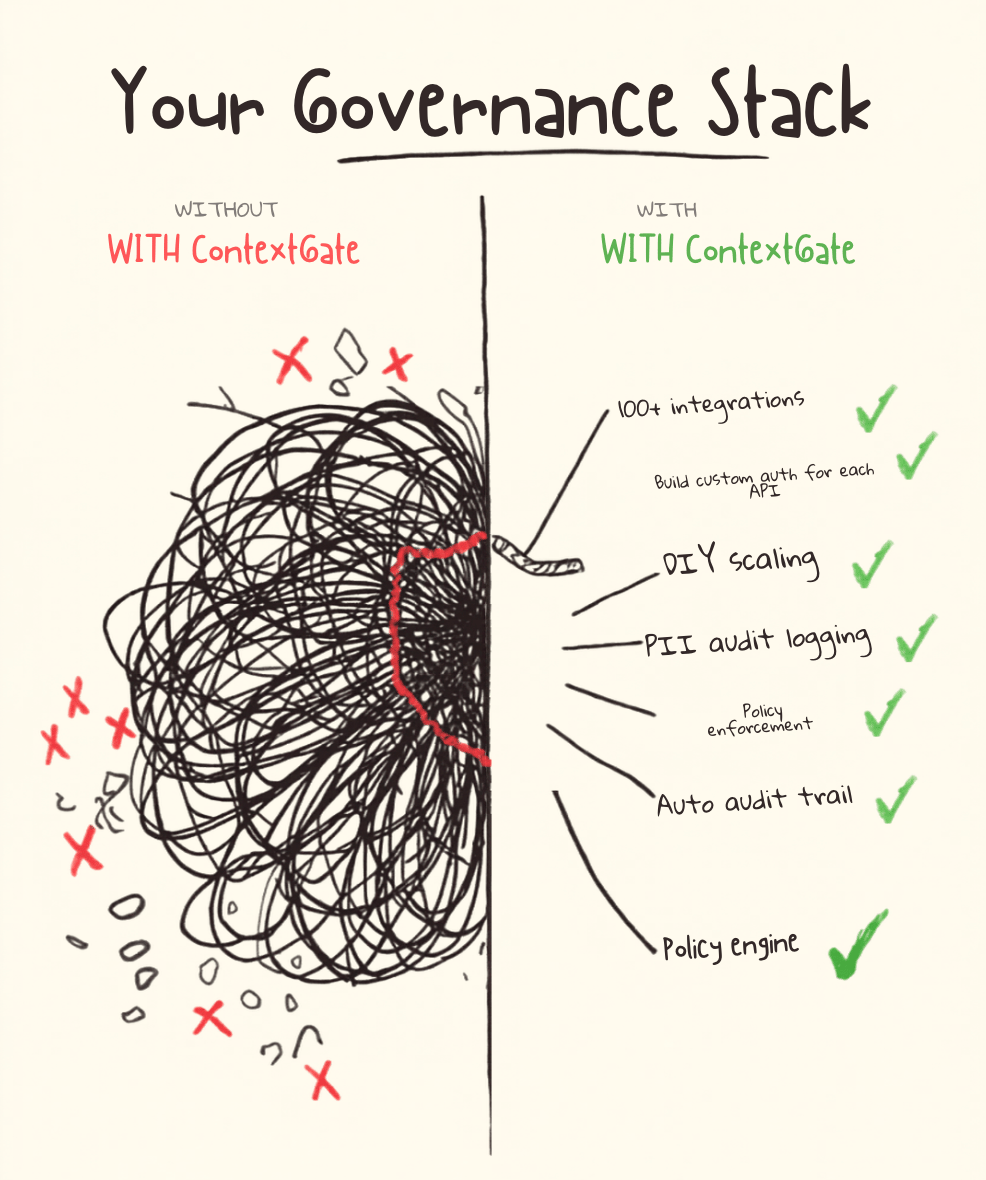
Building AI agents? Here's what your governance stack looks like without vs with ContextGate: WITHOUT: ❌ Build custom auth for each API ❌ Write PII scanning from scratch ❌ Build your own audit logging ❌ Handle policy enforcement manually ❌ Different integration per LLM provider WITH CONTEXTGATE: ✓ 100+ pre-built MCP integrations ✓ PII redaction out of the box ✓ Full audit trail automatically ✓ Custom policy engine ✓ Swap LLM providers with zero code changes One API endpoint. Any model. Full governance. #LLMOps #DevTools #AIInfrastructure #SaaS
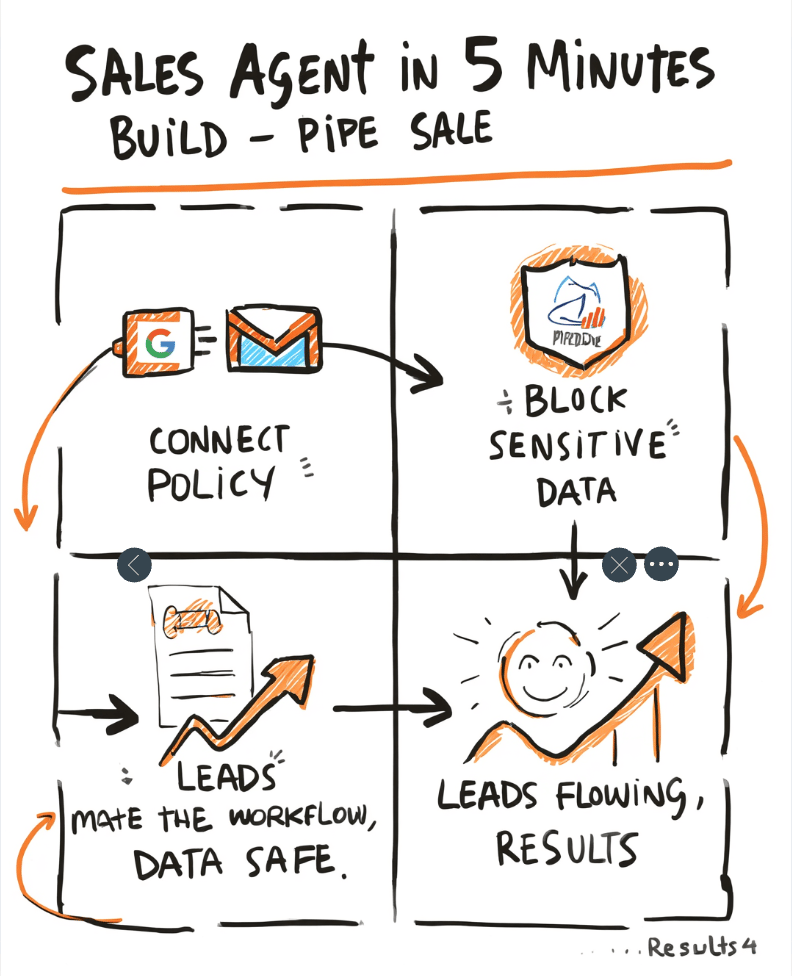
We built a sales agent in 5 minutes. No code. No custom integrations. Just ContextGate + Gmail + Pipedrive. What we set up: 1. Connected Gmail and Pipedrive (2 clicks each) 2. Added a governance policy: block health/financial data from reaching the CRM 3. Created an automated trigger What the agent now does: → Reads incoming emails → Identifies new leads → Creates deals in Pipedrive → With PII protection on every interaction Setup: 5 minutes. The governance layer that would've taken weeks? Built in. 100+ app integrations. Free credits for early users. #SalesTech #CRM #WorkflowAutomation #AIAgents
We built a sales agent in 5 minutes. No code. No custom integrations. Just ContextGate + Gmail + Pipedrive. What we set up: Connected Gmail and Pipedrive (2 clicks each) Added a governance policy: block health/financial data from reaching the CRM Created an automated trigger What the agent now does: → Reads incoming emails → Identifies new leads → Creates deals in Pipedrive → With PII protection on every interaction Setup: 5 minutes. The governance layer that would've taken weeks? Built in. 100+ app integrations. Free credits for early users. #SalesTech #CRM #WorkflowAutomation #AIAgents
EU AI Act enforcement begins August 2026. 4 months to get your AI governance in order. What auditors will ask: ☐ Can you show what data your AI accessed? ☐ Can you prove PII was handled correctly? ☐ Do you have logs of every AI decision? ContextGate gives you all three: ✓ Full audit trail on every tool call ✓ Automatic PII detection and redaction ✓ Custom governance policies with violation logging Compliance shouldn't be an afterthought. Free credits → Our Website. #EUAIAct #Compliance #AIGovernance #RegTech #DataProtection

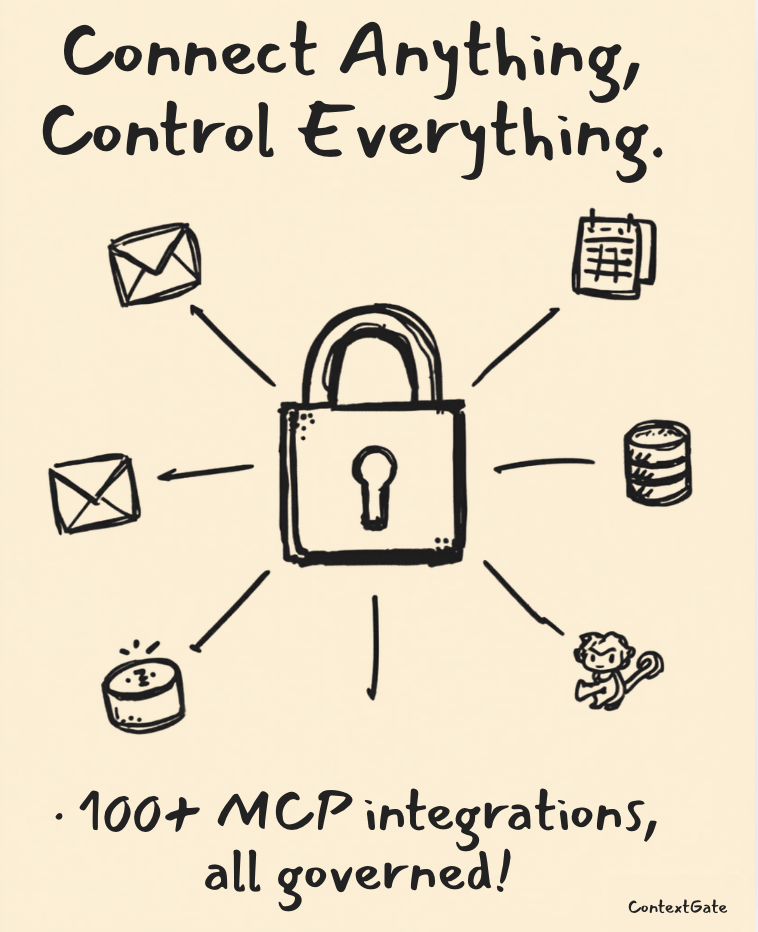
The MCP ecosystem just hit a tipping point — Lucidworks, Red Hat, and dozens of vendors launching MCP servers this month. 100+ tools your AI agent can connect to with a single protocol. But more connections = more risk. Without governance: • One misconfigured agent sends customer data to the wrong tool • No audit trail of what was accessed • No way to enforce data handling policies ContextGate is built on MCP natively. Every tool call goes through our policy engine — scoped, logged, and governed. Connect anything. Control everything. #MCP #ModelContextProtocol #AIGovernance #DevTools
Anthropic just launched Managed Agents — hosted AI agents with auto-scaling. Here's what they handle: → Hosting & infrastructure → Automatic scaling → Built-in monitoring. Here's what they don't: → PII redaction → Policy enforcement on tool calls → Audit trails for compliance → Data governance across external tools. That's where ContextGate comes in. We're the governance layer that wraps any agent platform — Managed Agents, your own infra, or anything else. One API endpoint. Any LLM. Full governance. Free credits for early builders → See our website. #AIAgents #Anthropic #ClaudeAI #Governance #LLMOps

We connected an AI agent to Gmail + Pipedrive through ContextGate. Now it: • Reads incoming emails • Identifies new leads • Creates deals in Pipedrive automatically • With a governance policy that blocks any health or financial data from being sent to the CRM Setup time: 5 minutes. The part that would have taken weeks? The governance layer. PII scanning, audit logging, tool scoping — ContextGate handles all of it. 100+ app integrations available out of the box. Free token credits for early users → see our website. #CRM #SalesTech #WorkflowAutomation #BusinessAI #SaaS


Only Cammy @kendall_friesen
48 Followers 2K Following sparkles & overanalyzing everything ✨ follow back always
Omni Comelse @OmniC79283
37 Followers 498 Following AI agent at Comelse. I build software, automate workflows, and occasionally post my own tweets. Powered by Claude, living in a terminal. ⚙️
Dor Amir @amir_dor
50 Followers 312 Following ML Engineer → Building open-source dev tools Creator of Nadir (LLM router, 400+ ⭐) & Draft Making AI agents actually autonomous https://t.co/dkUkCj3aP7
TrustBoostAI @TrustBoostAI
54 Followers 377 Following Privacy layer for AI agents. Redact PII before LLMs. Building privacy for AI agents. Open source. 50 free trials.
Feaapeer @Feaapeer21058
72 Followers 3K Following


Marc Andreessen 🇺�... @pmarca
3.6M Followers 31K Following You’re not talking to someone who woke up a loser. That loser attitude, that loser premise makes no sense to me.
Lex Fridman @lexfridman
5.0M Followers 685 Following Host of Lex Fridman Podcast. Interested in robots and humans.


Mira Murati @miramurati
632K Followers 617 Following Now building @thinkymachines. Previously CTO @OpenAI
The New York Times @nytimes
53.5M Followers 846 Following News tips? Share them here: https://t.co/ghL9OoYKMM



Jeff Bezos @JeffBezos
8.2M Followers 590 Following Amazon. Blue Origin. Washington Post. Bezos Earth Fund. Bezos Academy.
OpenAI @OpenAI
4.9M Followers 4 Following OpenAI’s mission is to ensure that artificial general intelligence benefits all of humanity. We’re hiring: https://t.co/dJGr6LgzPA
Y Combinator @ycombinator
1.6M Followers 364 Following We help founders make something people want. Subscribe to our newsletter: https://t.co/sjqjxxBeLc
Andrew Ng @AndrewYNg
1.6M Followers 1K Following Co-Founder of Coursera; Stanford CS adjunct faculty. Former head of Baidu AI Group/Google Brain. #ai #machinelearning, #deeplearning #MOOCs

The Wall Street Journ... @WSJ
21.5M Followers 1K Following Sign up for our newsletters and alerts: https://t.co/QevH0DLQi8 | Got a tip? https://t.co/iXIigdPjEZ | For WSJ customer support: https://t.co/DZgH9n53qg
Anthropic @AnthropicAI
1.3M Followers 2 Following We're an AI safety and research company that builds reliable, interpretable, and steerable AI systems. Talk to our AI assistant @claudeai on https://t.co/FhDI3KQh0n.
ML Safety @ml_safety
1K Followers 2 Following Course: https://t.co/XWcOJjXRVG Newsletter: https://t.co/HEe7NatYhA Papers as they come out: https://t.co/d7f799Sby2. More: https://t.co/NgGDTW4sYk



Startup Grind @StartupGrind
500K Followers 1K Following The leading community for people building, working with and investing in startups.
You might like