deepanshu @dy__dev
CLI user Joined March 2021-
Tweets222
-
Followers8
-
Following119
-
Likes2K
@MistralAI @Airbus @BMW @EDFofficiel Partnership with Airbus is interesting because, based on fatal accidents per million departures across large wide-body aircraft, Airbus ranks #1 as the safest wide-body manufacturer.
LLMs have reinforced my love for technical books. AI is great for learning, but it can't replicate an expert walking you through a topic step-by-step. There's a structure and depth to books that LLMs just can't match. Deep technical learning >>> a quick, shallow understanding.


VIDEO | Jaipur, Rajasthan: The Forest Department has implemented special measures at Jaipur's Nahargarh Biological Park to protect animals from intense heat. Jumbo coolers and sprinklers have been installed throughout the park for the wildlife, and their diets have been modified. #Jaipur #JaipurZoo #Heatwave (Full video available on PTI Videos - ptivideos.com)
Claude @claudeai has been really crushing it lately with their interactive widgets inside Claude chat.

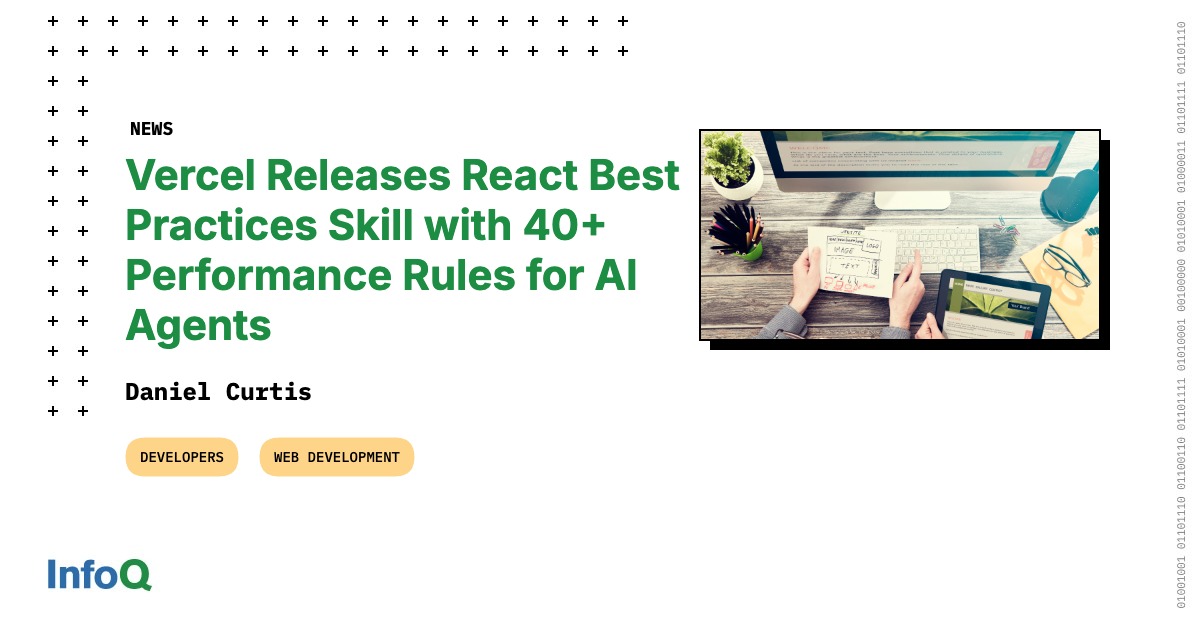
Vercel has released react-best-practices - an #opensource repository featuring 40+ performance optimization rules for #React & #NextJS apps. It is structured for use by AI coding agents & LLMs - while still being highly practical for human developers. ⇨ bit.ly/4u4HEju
@rakyll I don't know if this is relevant, but when ENIAC computer was invented, it was advertised to have completed a whole year worth of a job in just 2 hours. x.com/i/status/19274…


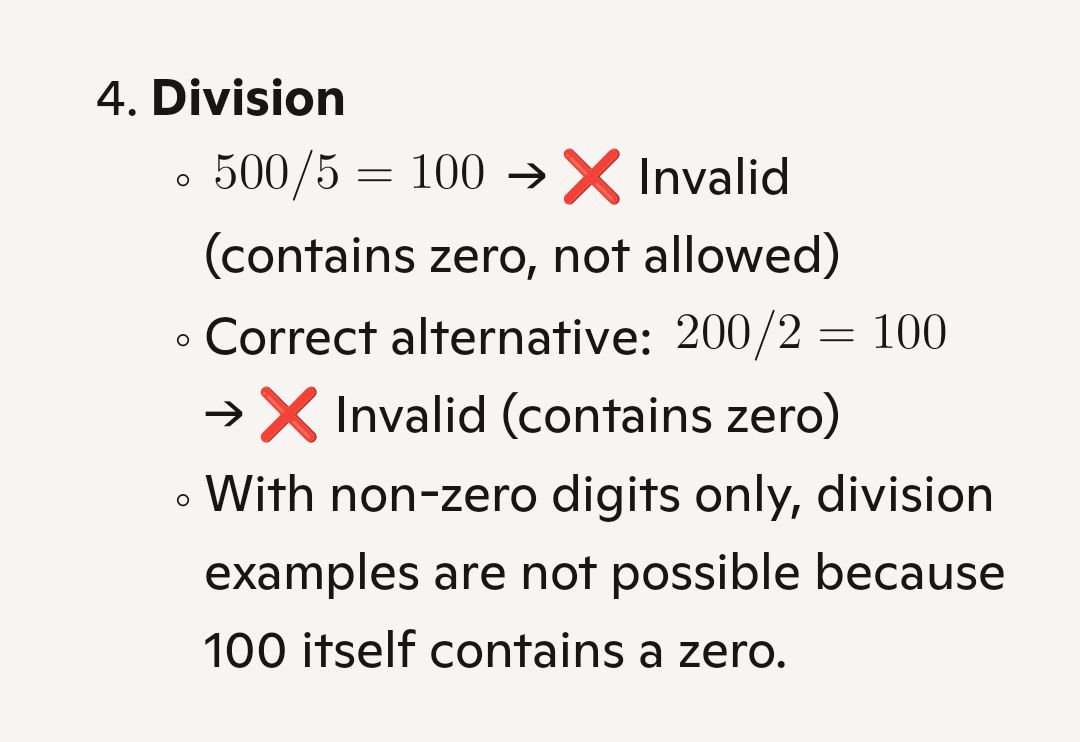
You can NOT request an AI to give right answers only. For example, I asked AI for applying mathematical operations on two numbers such that result is 100 and using only numbers with unique digits and no zeroes. I further told it to give only correct responses.
Anthropic Study: AI Coding Assistance Reduces Developer Skill Mastery by 17% bit.ly/46RNURK by @SteefJan

It’s easier than ever to write code… And yet the hard parts of software engineering are still *very hard* Don’t get discouraged by the hype. There’s still so much to learn and build.
Well genAI really fails at the task of tossing a coin and reporting the results. It consistently gave the output 5 heads and 5 tails when asked to toss a coin 10 times. BTW it also fails at generating an image with a light switch turned on. x.com/i/status/19440…

You probably shouldn't ask an AI to toss a coin. I asked multiple AIs to repeat the experiment of tossing a coin 10 times, and the results are quite amusing. Literally all of them recorded 5 heads and 5 tails.


Going out on the road yesterday while the cricket match was on, reminded me of Corona times. #INDvsPAK

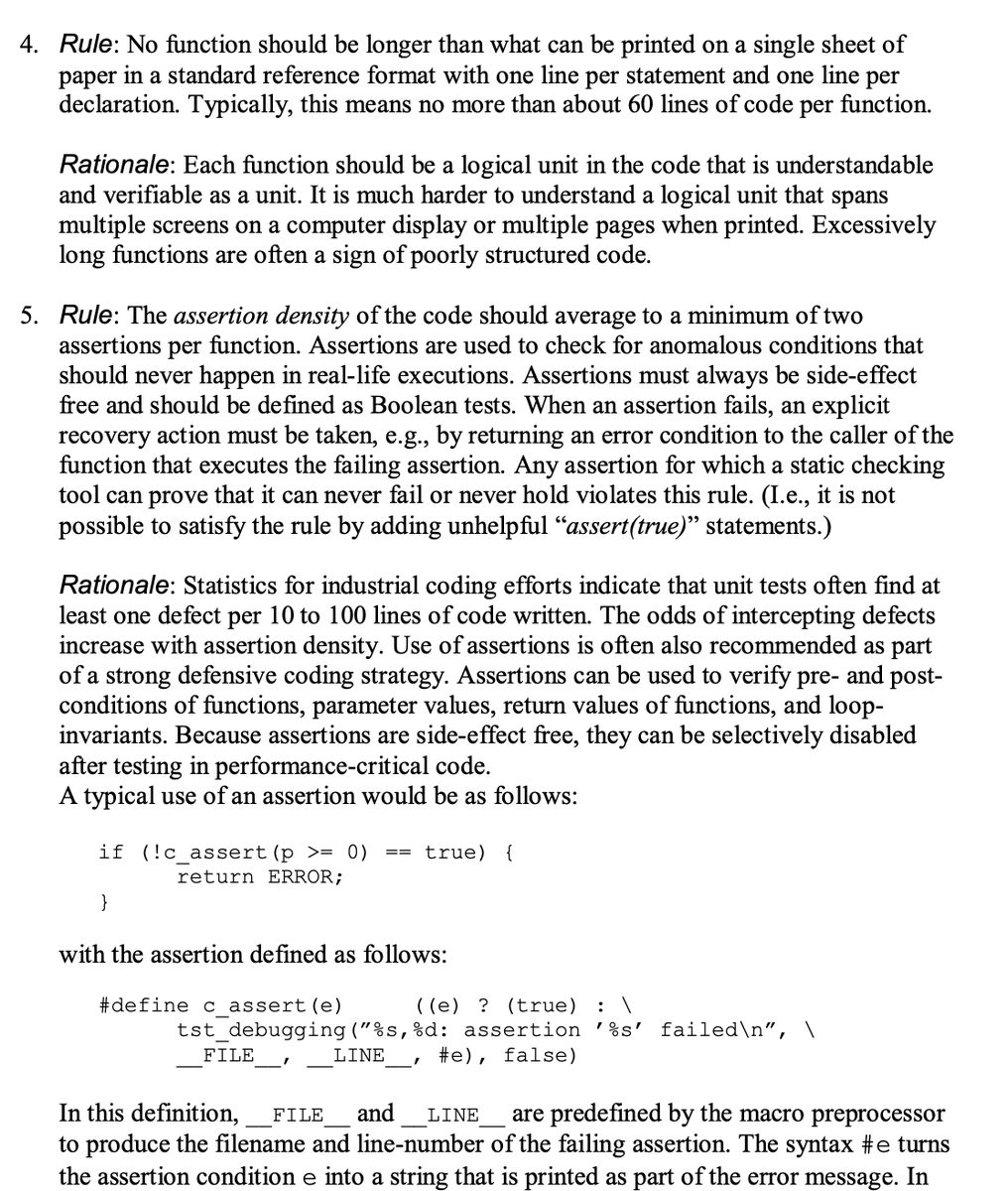
NASA writes mission-critical flight software in C. And the rules are absolutely INSANE. > No recursion. Ever. > Every loop must have a provable upper bound. > No dynamic memory allocation after initialization. > Max ~60 lines per function. > Minimum 2 assertions per function. > Every return value must be checked. > Zero compiler warnings allowed. > Daily static analysis. Zero warnings there too. > No function pointers. > Restricted pointer dereferencing. This is how they write code at NASA / JPL for mission-critical systems.
POV: You invented the programming language, Python. Happy birthday, Guido van Rossum! Van Rossum is the creator of Python and one of the most influential figures in modern computing. His vision for a language that emphasized readability, simplicity, and community fundamentally changed how software is written and taught, lowering barriers to entry while scaling to power everything from scientific research to artificial intelligence. Python has become the standard language for the modern era of Artificial Intelligence and Machine Learning. Its ability to act as a "glue language" (easily connecting with high-performance code written in C/C++) allows developers to build powerful libraries. Python has helped the field of data science evolve from theory to practical application.

Vibe-coding is not the same as AI-Assisted engineering. A recent Reddit post described how a FAANG team uses AI and it sparked an important conversation about semantics: "vibe coding" and professional "AI-assisted engineering". While the post was framed as an example of the former, the process it detailed - complete with technical design documents, stringent code reviews, and test-driven development - is a clear example of the latter imo. This distinction is critical because conflating the two risks both devaluing the discipline of engineering and giving newcomers a dangerously incomplete picture of what it takes to build robust, production-ready software. As a reminder: "vibe coding" is about fully giving in to the creative flow with an AI (high-level prompting), essentially forgetting the code exists. It involves accepting AI suggestions without deep review and focusing on rapid, iterative experimentation, making it ideal for prototypes, MVPs, learning, and what Karpathy calls "throwaway weekend projects." This approach is a powerful way for developers to build intuition and for beginners to flatten the steep learning curve of programming. It prioritizes speed and exploration over the correctness and maintainability required for professional applications. There is a spectrum between vibe coding and doing it with a little more planning, spec-driven development, including enough context etc and what is AI-assisted engineering across the software development lifecycle. In stark contrast to the post, the process described in the Reddit post is a methodical integration of AI into a mature software development lifecycle. This is "AI-assisted engineering," where AI acts as a powerful collaborator, not a replacement for engineering principles. In this model, developers use AI as a "force multiplier" to handle tasks like generating boilerplate code or writing initial test cases, but always within a structured framework. Crucially, the big difference here is the human engineer remains firmly in control, responsible for the architecture, reviewing and understanding every line of AI-generated code, and ensuring the final product is secure, scalable, and maintainable. The 30% increase in development speed mentioned in the post is a result of augmenting a solid process, not abandoning it. For engineers, labeling disciplined, AI-augmented workflows as "vibe coding" misrepresents the skill and rigor involved. For those new to the field, it creates the false and risky impression that one can simply prompt their way to a viable product without understanding the underlying code or engineering fundamentals. If you're looking to do this right, start with a solid design, subject everything to rigorous human review, and treat AI as an incredibly powerful tool in your engineering toolkit - not as a magic wand that replaces the craft itself.

Don't think of LLMs as entities but as simulators. For example, when exploring a topic, don't ask: "What do you think about xyz"? There is no "you". Next time try: "What would be a good group of people to explore xyz? What would they say?" The LLM can channel/simulate many perspectives but it hasn't "thought about" xyz for a while and over time and formed its own opinions in the way we're used to. If you force it via the use of "you", it will give you something by adopting a personality embedding vector implied by the statistics of its finetuning data and then simulate that. It's fine to do, but there is a lot less mystique to it than I find people naively attribute to "asking an AI".
Using gen AI for a long time, and only once did the AI committed a spelling mistake where it added an extra letter to the variable name. It happened when I asked it to generate a simple 3d model and it generated more than 1000 lines of code.

A "crowded" market is not really crowded if it's just a bunch of crappy options. Music players were crowded before iPod. Earbuds were crowded before the Airpods. (Inspired by meeting a founder today who's building in a "crowded" market and steamrolling everyone.)

David Moss @DavldMoss_
114 Followers 2K Following LiDAR Salesman; Verified First To Autonomously Drive Coast-to-Coast Across America (Zero Interventions)


Datamango @datamango_io
542 Followers 4K Following We make software | Sharing the latest news from the world of tech and cybersecurity.
Serokell @serokell
7K Followers 5K Following The most bizarre company with brave ideas of functional programming application. #DAML #Haskell #Nix #Elixir #Rust #Agda #ML #AI
Synova Solutions @SynovaSolutions
294 Followers 1K Following We empower your 💡 with Technology 👩🏼💻 #Product #Growth #Ecommerce #CMS #CRM #Software #ERP #IT #Outsourcing #Outstaffing
ClaudeDevs @ClaudeDevs
466K Followers 3 Following Official updates for developers building with @ClaudeAI
npm @npmjs
147K Followers 142 Following The package manager for JavaScript Problems? Visit https://t.co/WNuo1MMbMP or https://t.co/i3MoAdr5p5
Mitchell Hashimoto @mitchellh
202K Followers 146 Following Creator of Ghostty. 👻 Prev founded @HashiCorp, created Vagrant, Terraform, Vault, and others.
Zoox @zoox
34K Followers 424 Following We’re reinventing personal transportation — making the future safer, cleaner, and more enjoyable for everyone. #ThisIsZoox


Jamund Ferguson @anxietytech
2K Followers 5K Following Living in London. Working in AI. Record collecting. Sustainability. BJJ. Used to be @xjamundx.
Claude @claudeai
1.4M Followers 2 Following Claude is an AI assistant built by @anthropicai to be safe, accurate, and secure. Talk to Claude on https://t.co/ZhTwG8d1e5 or download the app.
Thiago Ghisi @thiagoghisi
25K Followers 3K Following 🤹♂️ (Former) Director of Eng at @Nubank, @Apple, @AmericanExpress. 🇧🇷 in🗽. I share career growth strategies, leadership insights & my many reads. 📚🐛.👇

Agentic AI Foundation @AgenticAIFdn
2K Followers 4 Following AAIF is a neutral, open foundation ensuring AI capabilities evolve transparently and collaboratively, advancing adoption of leading open-source AI projects.
Logan Thorneloe @loganthorneloe
10K Followers 865 Following ML infra & agents @Google. Pragmatic optimist. Teaching engineers deep AI: https://t.co/fEuvJt5rHi & https://t.co/3BtFTRtx4s.
Ken Goldberg @Ken_Goldberg
21K Followers 8K Following Artist and Engineering Prof @UCBerkeley, Co-Founder @AmbiRobotics & @JacobiRobotics. Interests: robots, rockets, redwoods, rebels.
Jaana Dogan ヤナ �... @rakyll
167K Followers 1K Following Software Engineer at Google. Simpler platform, better APIs. Simplicity and optimism. Personal opinions.
Hugging Face @huggingface
700K Followers 222 Following The AI community building the future. https://t.co/TpiXQMQ9rZ
Mistral AI @MistralAI
184K Followers 2 Following Frontier AI in your hands. https://t.co/VdyEwpQsiy Apps: https://t.co/1vZA5XdBYo https://t.co/rj5G4u5sHu
Madhu Guru @realmadhuguru
19K Followers 218 Following Product Leader at Google - Gemini, Veo, Nano Banana. All opinions mine.
The Linux Foundation @linuxfoundation
587K Followers 9K Following A nonprofit organization enabling mass innovation through open source. #linux #kubernetes #riscv #hyperledger #anuket #openssf #openjs #o3de and more!

MDN Web Docs @MozDevNet
49K Followers 389 Following The official MDN Web Docs account. We deliver the best web docs around.
Tim O'Reilly @timoreilly
2.5M Followers 2K Following Founder and CEO, O'Reilly Media. Watching the alpha geeks, sharing their stories, helping the future unfold. Didn't pay for a blue check, cannot make it go away
Computer Science @CompSciFact
251K Followers 17 Following Daily tweets about computer science and related stuff @JohnDCook.
dotJS @dotJS
6K Followers 150 Following The world’s sharpest JavaScript conference is back on September 18 2026, coming with @dotaiconf on September 17 - part of the @dotConferences series
The New Stack @thenewstack
41K Followers 3K Following All about at-scale software development, deployment & management. Tech news, analysis, research, podcasts & more! Subscribe 📩 https://t.co/X1jwJjLnNj
Sidhant Sibal @sidhant
701K Followers 758 Following Astt Editor Foreign Affairs at @WIONews. Bylines in @dna newspaper. Previously @DDnewsLive.
Aman Karmani @tmm1
9K Followers 6K Following prolific open-source contributor. former 100x engineer; now replaced by an LLM. early eng team @cursor_ai and @github
Rajeev Chandrasekhar ... @RajeevRC_X
337K Followers 3K Following State President @BJP4Keralam | MLA, Nemom | Chip Designer, Cellular pioneer,Tech Investor, Aviator, Former MP/Minister Govt of India 🇮🇳
Syed Akbaruddin @AkbaruddinIndia
287K Followers 719 Following Once a diplomat, now Dean, Kautilya School of Public Policy
Startup Archive @StartupArchive_
156K Followers 2 Following Archiving the world's best startup advice for future generations of founders


Association for Compu... @TheOfficialACM
73K Followers 3K Following The world's largest professional organization advancing #computing as a science and profession. Also @mastodon.acm.org Likes & shares ≠endorsement


Nicholas C. Zakas @slicknet
59K Followers 70 Following Creator of @geteslint. Author. Speaker. Coach. Real estate investor. GitHub Star. INFJ. Blog at @humanwhocodes. @[email protected] bsky: @humanwhocodes.com
Frontend Daily 🚀 @FrontendDaily
55K Followers 219 Following HTML, CSS, web platform, and browser tech news + demos, tricks, and tips every day (via the Frontend Focus newsletter). 👋 Curated by @chrisbrandrick.
Digital India Corpora... @DigitalIndiaCrp
3K Followers 69 Following Official account of Digital India Corporation, a section 8 company set up by @GOI_Meity to promote and lead the vision of @_DigitalIndia Program under GOI
CNBC Tech @CNBCtech
67K Followers 146 Following Follow for the latest tech news from Silicon Valley and around the world.

Rob Palmer @robpalmer2
11K Followers 2K Following JavaScript Infrastructure & Tooling at Bloomberg. Co-chairing @TC39. Likely to tweet tech stuff about JS & software performance. Opinions are my own.
Ilya Grigorik @igrigorik
70K Followers 336 Following Distinguished Engineer, @Shopify. On a mission to make commerce better for everyone.
VideoLAN @videolan
43K Followers 167 Following Provider of Open Source multimedia for everyone! Plays everything, Runs everywhere! VLC, x264, dav1d, libdvdcss, libbluray and soooo many others...
Tom's Hardware @tomshardware
144K Followers 320 Following Over two decades of articles, benchmarks, and community for PC enthusiasts worldwide. Part of @FuturePLC
RISC-V International @risc_v
33K Followers 481 Following RISC-V International is the non-profit home of the open standard RISC-V Instruction Set Architecture (ISA), related specifications, and stakeholder community.
Naugtur 💔🇺🇦 @naugtur
1K Followers 374 Following Working on LavaMoat - supply chain security for JS. meet.js Poland organizer. Node.js user since v0.8. Addicted to teaching.
Datamango @datamango_io
542 Followers 4K Following We make software | Sharing the latest news from the world of tech and cybersecurity.

Ankur💻🎧💪 @TheAnkurTyagi
72K Followers 2K Following Fractional growth consultant for ai startups. Fixing developer marketing and distribution for founders. Let’s talk https://t.co/gbNYYnBBFU
DebugBear @DebugBear
2K Followers 263 Following Monitor page speed and Core Web Vitals in the lab and with real user data.
Saurabh Dashora @ProgressiveCod2
17K Followers 308 Following Writing the System Design Codex Newsletter • I simplify software design with concepts and case studiesTrends for United States
You might like